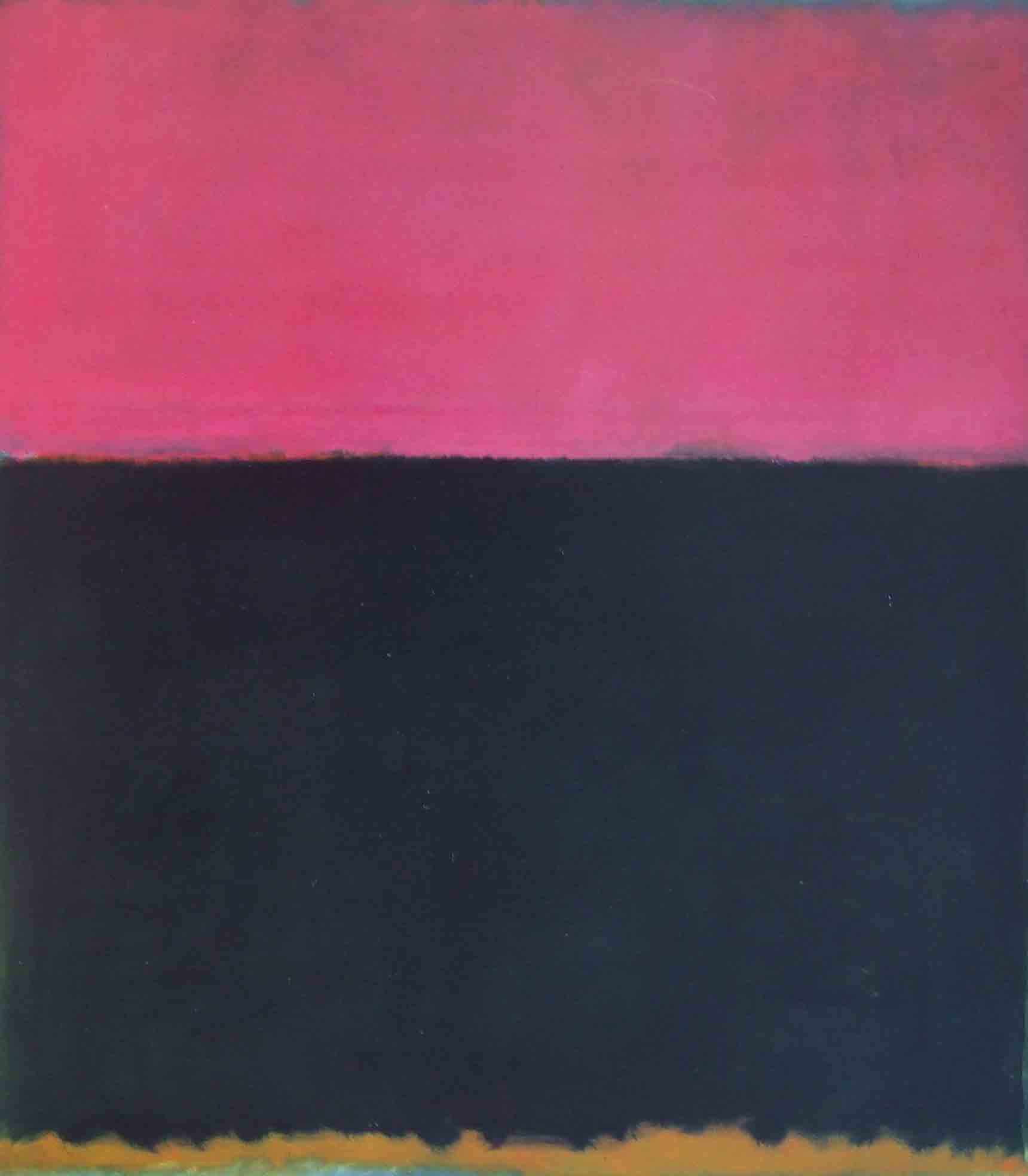
Mark Rothko 1903 - 1970
Jun. 23rd, 2008 09:51 pm![[personal profile]](https://www.dreamwidth.org/img/silk/identity/user.png) sweetsalome
sweetsalome Modern art has always brought forth conflicting emotions within me. How does one look at a painting, or a sculpture, and say: This is art? It is not something that is defined, is set in certain limits and parameters and meets criteria A, B, and C. You can not put it in a box, you can not judge one painting by the one next to it, and so on and so forth.
A hundred of years ago, I wonder if they had the same problem. If the French looked at paintings by Monet and Van Gogh, and said amongst themselves: Is this art? When my father speaks of art, he says the same thing that a lot of people do. I like things that look like things. A bowl of fruit, two women washing their hair at a stream, things that you put up in your dinning room wall and guest comment them while they dine.
So what do you do when it comes to modern art? I suppose I should back up a bit, and say that the modern art I am talking about, perhaps isn't so modern. The 60's, the 70's, after cubism, and the Industrial paintings of the second world war. I am talking about Pollock, and Kline, and of course Rothko.
Painters who worked not with apples, or bathing beauties, but colors and the feelings the evoke in a person. They did what every painters did before them, but they used it in a different manner. There didn't seem to be a rhyme or reason to it, splatters on a canvas, blobs of bright colors that crash into one another and then fade away. Bright, vibrant works that stare you in the face and force you to breath a bit more quickly.
What are you suppose to do with something like THIS? So full of light, so seemingly organized but at the same time . . . it's not. There are no straight edges, colors blur into one another, drawing attention to the center and the edges all at the same time. Dark forces, that seem to suck the light from the room. They are blocks of color, but they are also something else, something much more then that. These works are portals into something very different, they FORCE you to come to your own conclusions, your own feelings about it.
You see hay stacks, or perhaps strangers waiting for a train. You see these things and you relate to them in a personal way, you think of the last time you were waiting for something, perhaps even a train. While the works themselves may paint the experience in a different light, they are safe, it is something you can identify.
But what is this? How can you relate to that? What does it say to you? Does it remind you of a baby blanket, or early morning snow? Is it depressing, smothering? An empty void of which you have no control over? These emotions, these feelings deep inside our being is what the artist wants to get from us. It is an emotional hijacking. The price you must pay to stand in front of this canvas. You must feel and if you do not feel then this is lost on you.
You should not feel numb looking at this. Not unless that is what the artist wishes for you to feel. In a world, where we value being dead inside, these woks are meant to break us out of our stupor. Life should not be empty, cold, and completely void of any feeling and warmth. We should be human and if being human means we have to hurt and bleed, then so be it. If being human means we must weep at the sight of beauty, then so be it.
It is a small price to pay for our gift.
A hundred of years ago, I wonder if they had the same problem. If the French looked at paintings by Monet and Van Gogh, and said amongst themselves: Is this art? When my father speaks of art, he says the same thing that a lot of people do. I like things that look like things. A bowl of fruit, two women washing their hair at a stream, things that you put up in your dinning room wall and guest comment them while they dine.
So what do you do when it comes to modern art? I suppose I should back up a bit, and say that the modern art I am talking about, perhaps isn't so modern. The 60's, the 70's, after cubism, and the Industrial paintings of the second world war. I am talking about Pollock, and Kline, and of course Rothko.
Painters who worked not with apples, or bathing beauties, but colors and the feelings the evoke in a person. They did what every painters did before them, but they used it in a different manner. There didn't seem to be a rhyme or reason to it, splatters on a canvas, blobs of bright colors that crash into one another and then fade away. Bright, vibrant works that stare you in the face and force you to breath a bit more quickly.
What are you suppose to do with something like THIS? So full of light, so seemingly organized but at the same time . . . it's not. There are no straight edges, colors blur into one another, drawing attention to the center and the edges all at the same time. Dark forces, that seem to suck the light from the room. They are blocks of color, but they are also something else, something much more then that. These works are portals into something very different, they FORCE you to come to your own conclusions, your own feelings about it.
You see hay stacks, or perhaps strangers waiting for a train. You see these things and you relate to them in a personal way, you think of the last time you were waiting for something, perhaps even a train. While the works themselves may paint the experience in a different light, they are safe, it is something you can identify.
But what is this? How can you relate to that? What does it say to you? Does it remind you of a baby blanket, or early morning snow? Is it depressing, smothering? An empty void of which you have no control over? These emotions, these feelings deep inside our being is what the artist wants to get from us. It is an emotional hijacking. The price you must pay to stand in front of this canvas. You must feel and if you do not feel then this is lost on you.
You should not feel numb looking at this. Not unless that is what the artist wishes for you to feel. In a world, where we value being dead inside, these woks are meant to break us out of our stupor. Life should not be empty, cold, and completely void of any feeling and warmth. We should be human and if being human means we have to hurt and bleed, then so be it. If being human means we must weep at the sight of beauty, then so be it.
It is a small price to pay for our gift.
| “ | only in expressing basic human emotions — tragedy, ecstasy, doom, and so on. And the fact that a lot of people break down and cry when confronted with my pictures shows that I can communicate those basic human emotions . . . The people who weep before my pictures are having the same religious experience I had when I painted them. And if you, as you say, are moved only by their color relationship, then you miss the point. | ” |